The design process of the project is very crucial in order the project is on schedule and smooth. The gantt chart below out lines the task or phases of the project.
Project log:
A project log book was kept to document the activities done on each task such as discussion notes, task allocation, to-do-list, planning notes, design notes and complications that were encountered throughout the 11 weeks. The description of each task is outlined below.
Task 1: Design Research
The design research took 4 weeks to do and involved researching design that was time-feasible. Catapult designs were searched in the internet, and possible designs were taken into consideration as candidates. The candidate designs were then further researched for how it was made and whether that process was within the time limit we had. From that analysis of time-feasiblity, the onager design was chosen.
Task 2: Planning/ design review
The planning/design review phase involved reviewing the onager model to find what the possible modification could be made. Once the designed was reviewed, the materials needed were listed and were then either salvaged from recycle or bought from Bunnings Warehouse. The gantt chart for the project was also made during this phase.
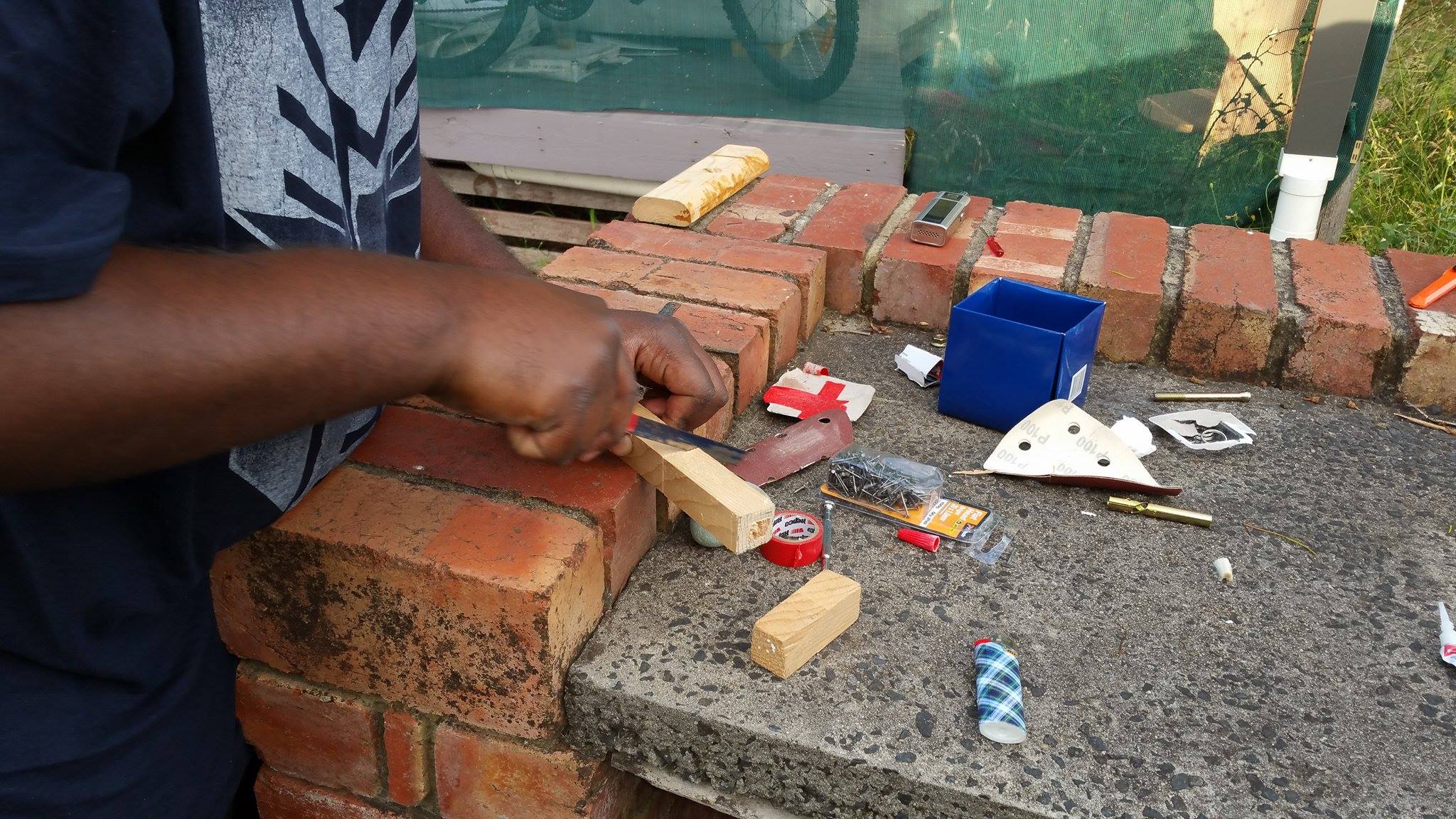
The tools that were used were own except for the saw and drill which were our friend's. All of the components used, except for the wooden plank, were also bought at Bunnings Warehouse. Overall, the cost of all the components were less than $50.
Task 3: Build prototype
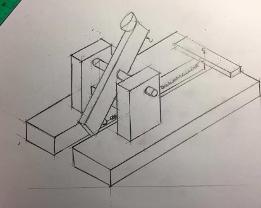
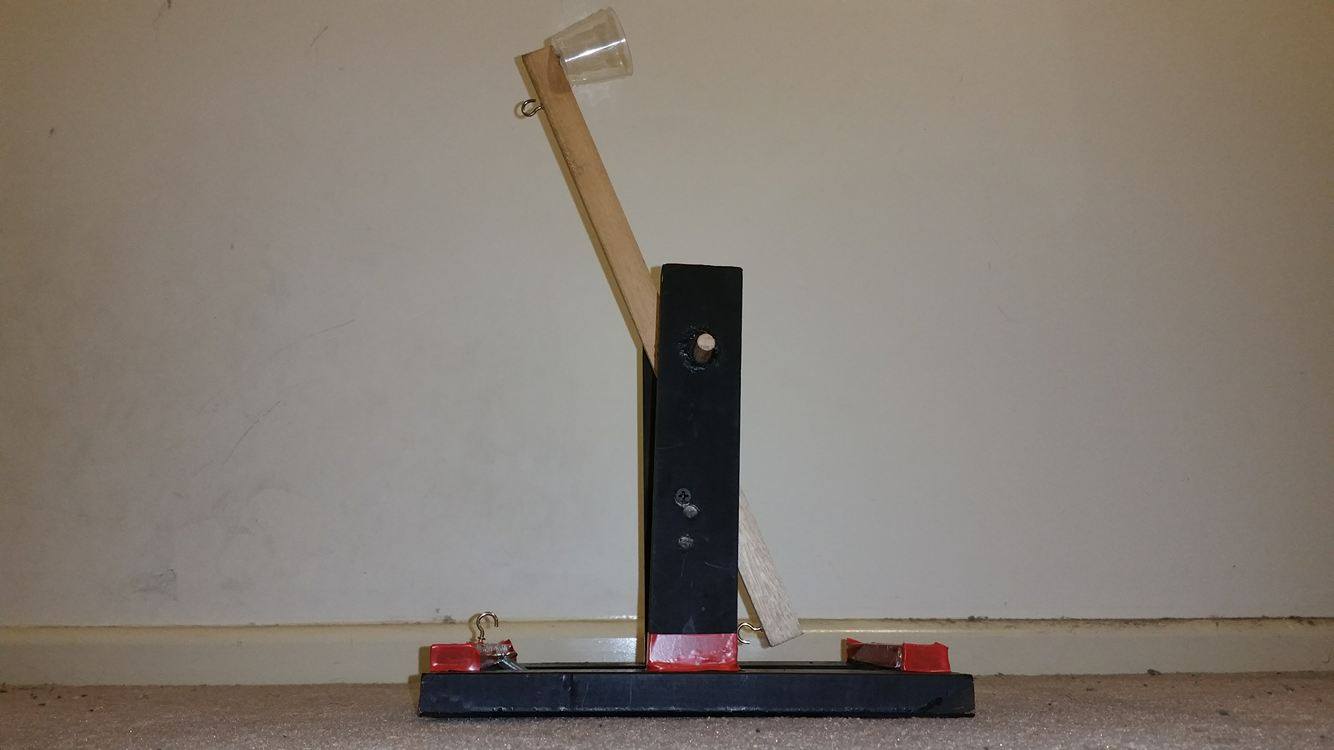
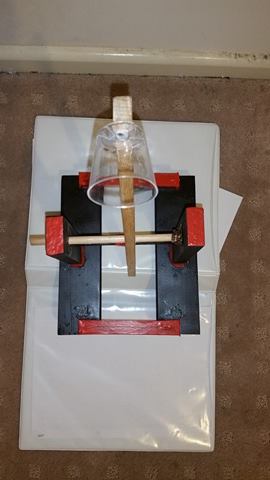
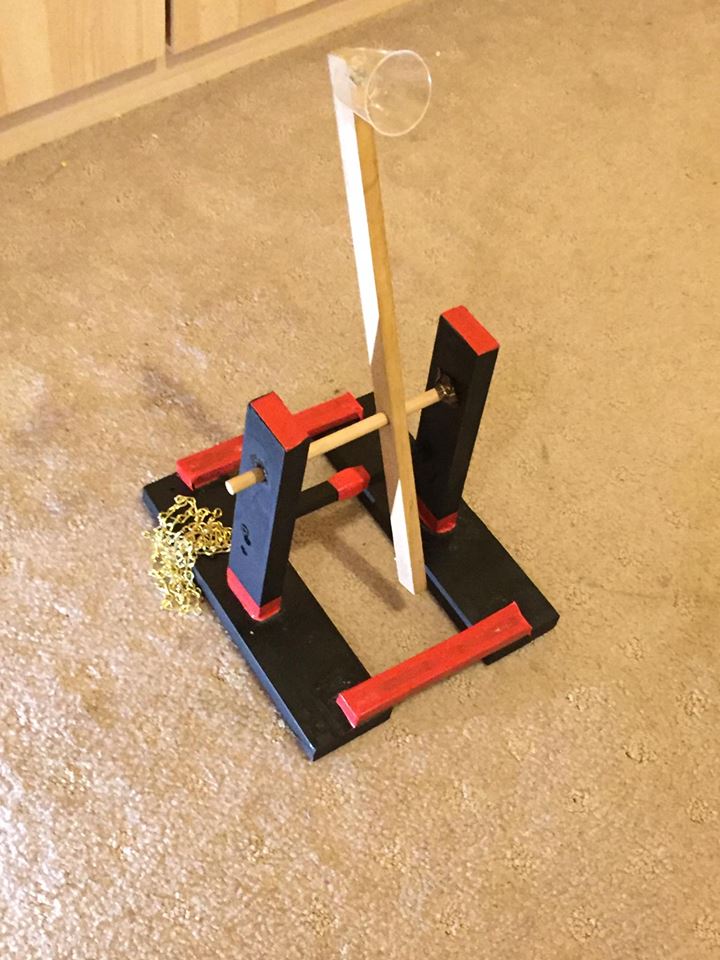
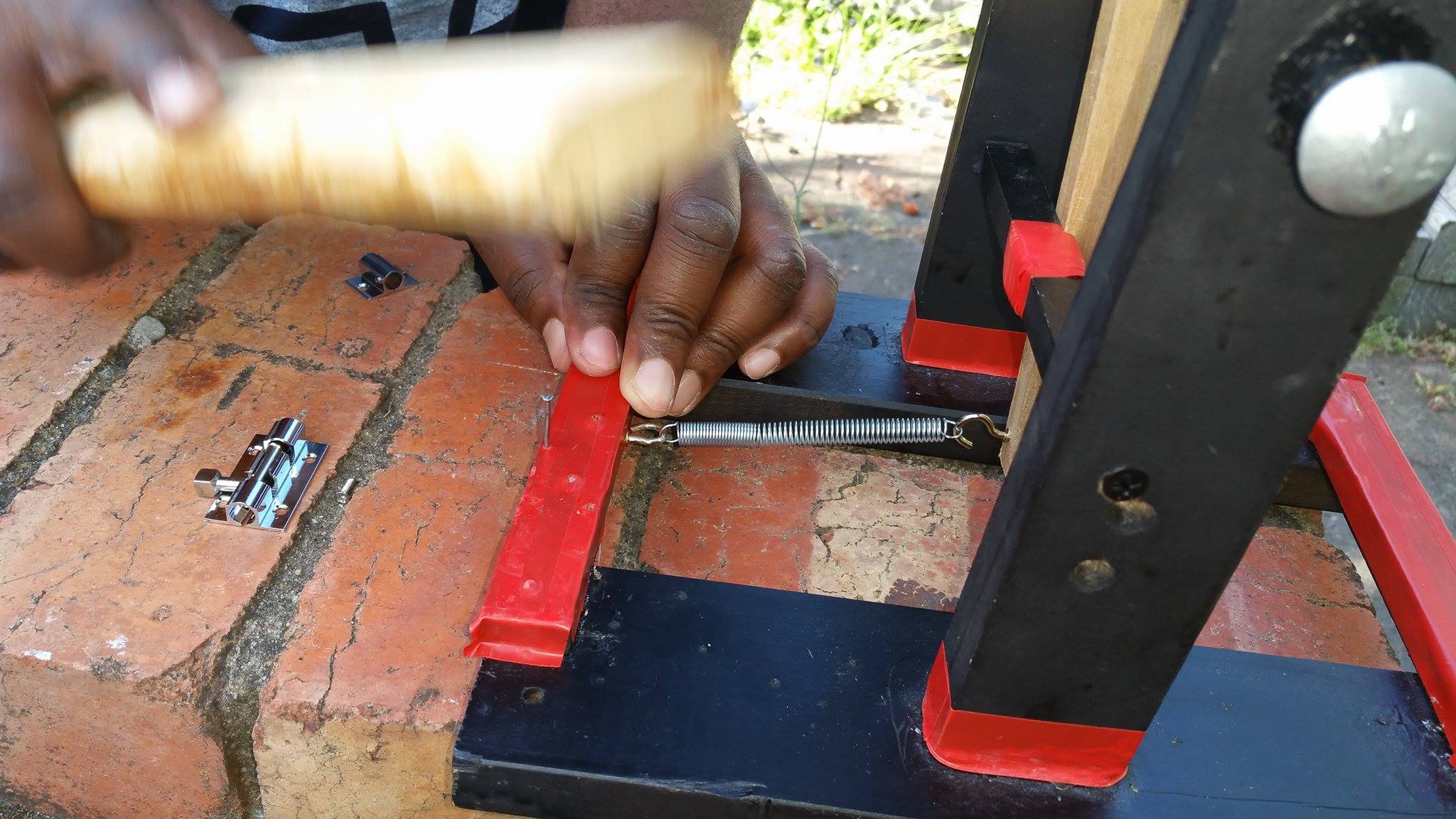
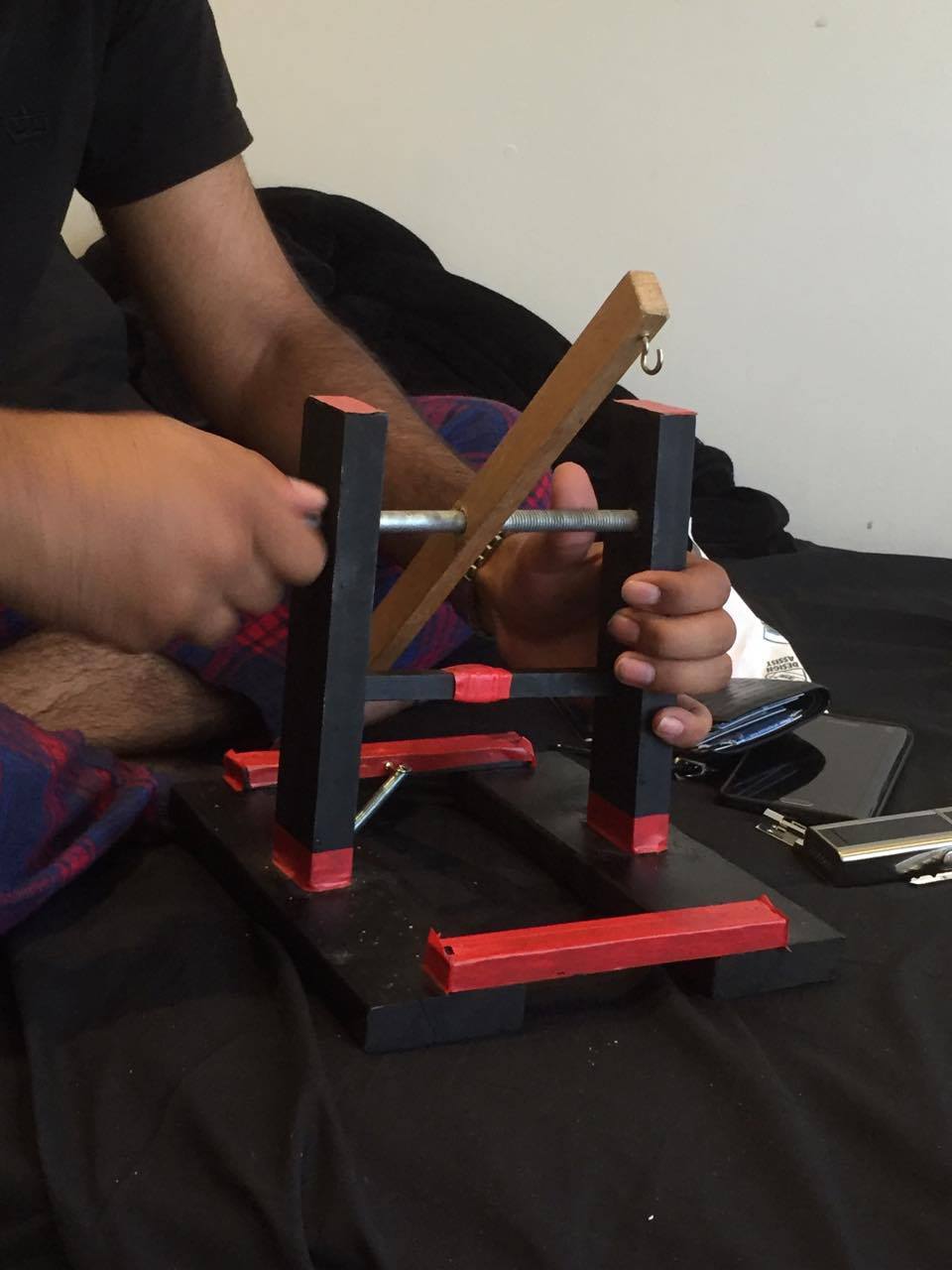
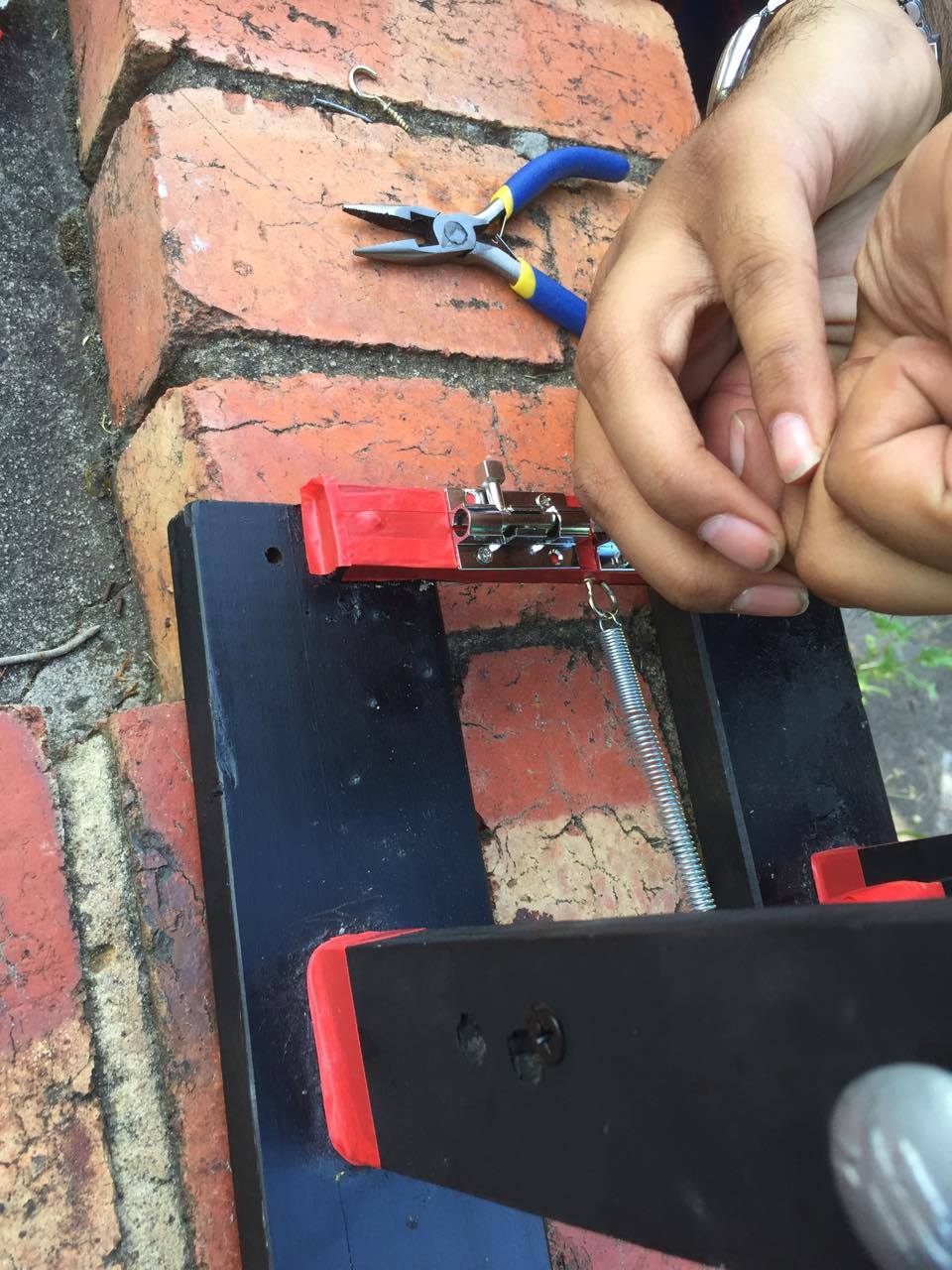
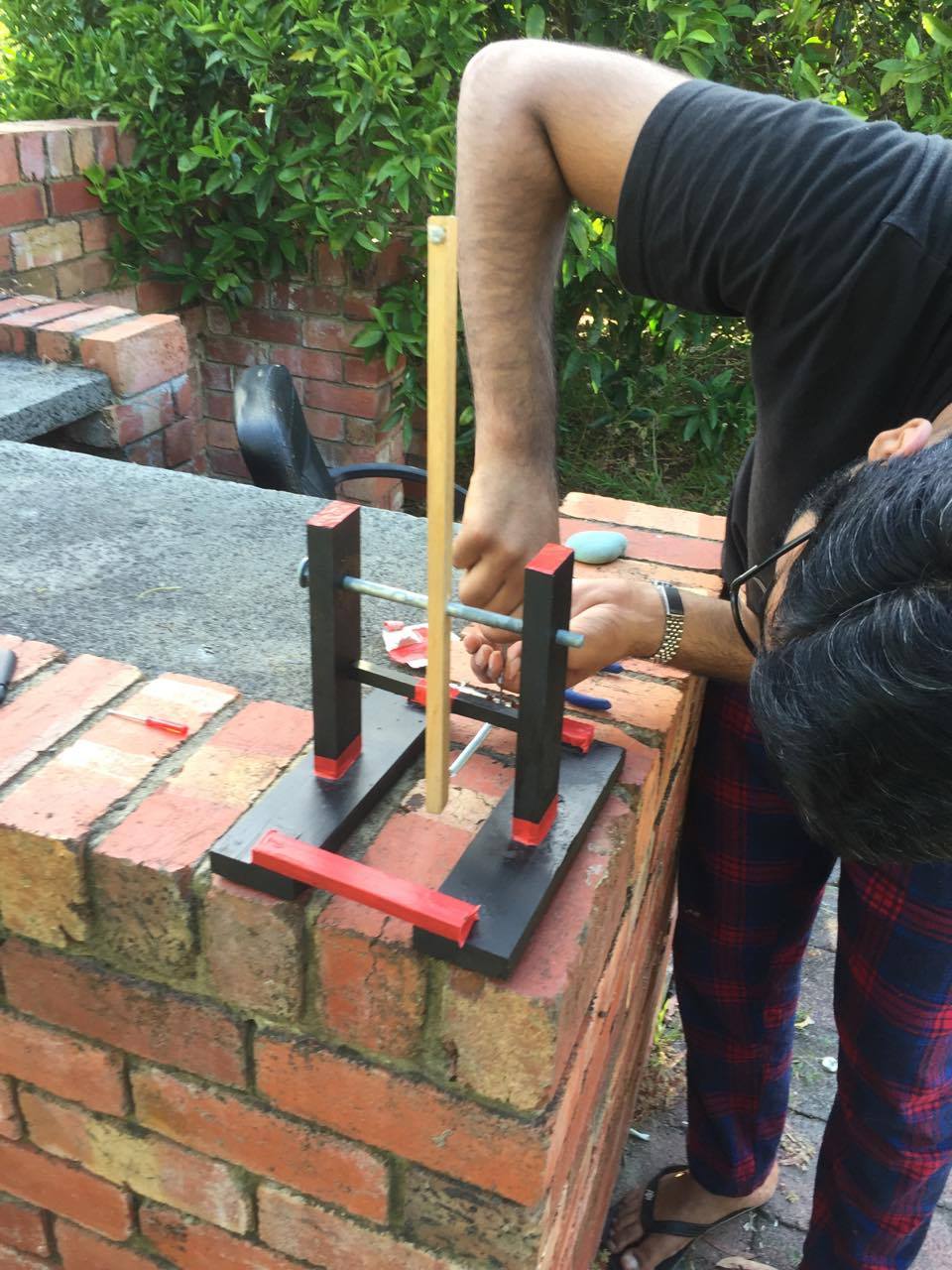
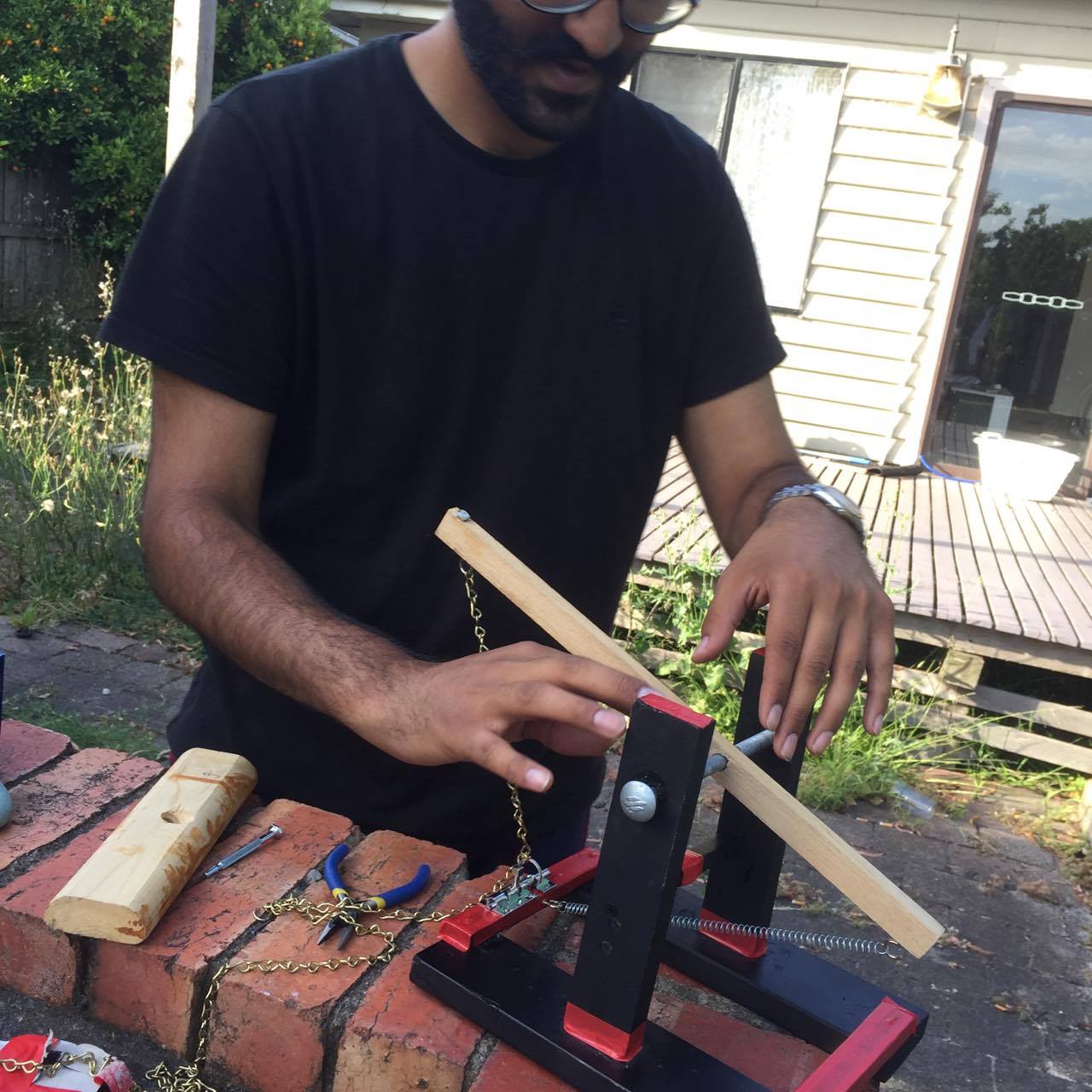
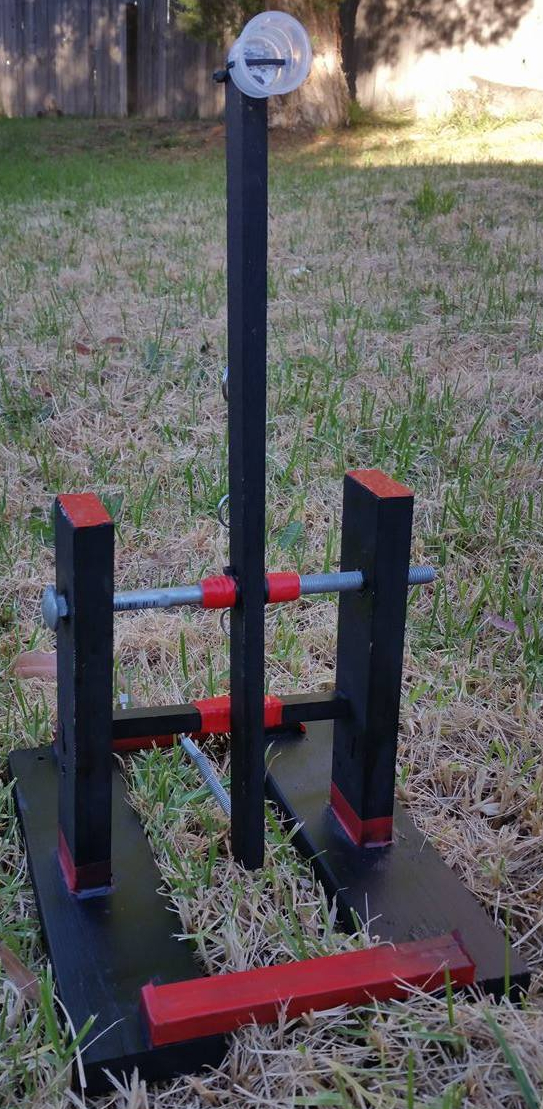
The prototype was first visualized in an isometric drawing of the catapult. From that drawing, the catapult was made.
Task 4: Prototype Testing
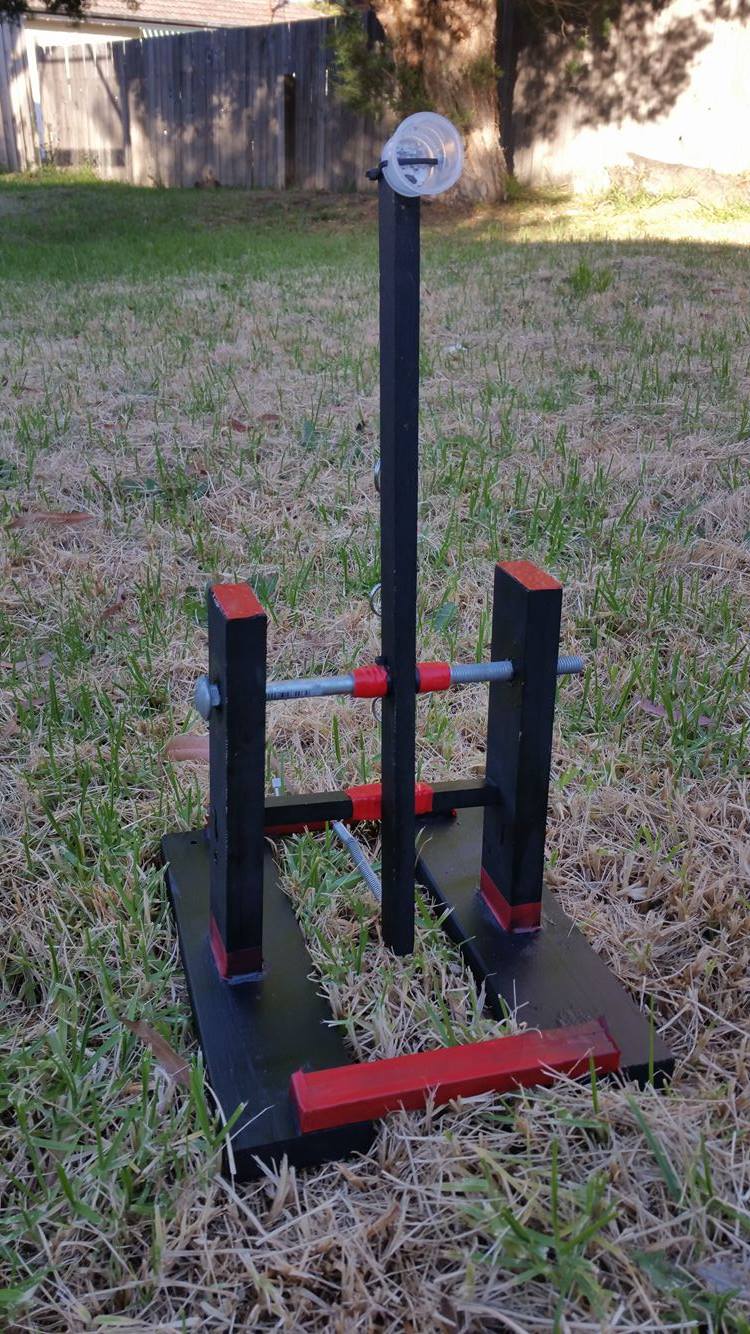
Prototype testing was done once the catapult had been built. This stage involved the actual testing of the catapult which was considered to be in it's prototype build. Functionality and structural-stability were the key area this test target so that any flaws in the design could be corrected.
Task 5:Prototype review
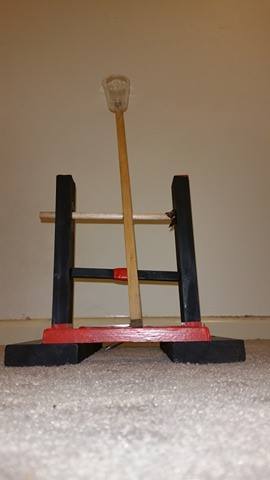
Prototype review involved reviewing the flaws noted in the initial test. From the initial test it was noted that the main area that needed review was accuracy and structural-stability. The wooden beam that was used initially used was not strong enough to support the circular motion of the arm thus it broke. Also, the projectile launched was further out than the desired distance. The design of the catapult were then reviewed to find what alternative solutions there are to improve the flaws found.
Task 6: Improvements/ Test 2
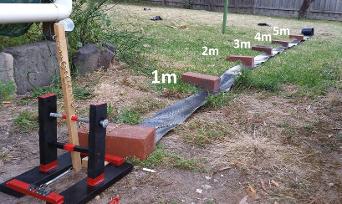
This phase involved modifying and improving the flaws that were found. Once the catapult was improved, test was done. Test 2 involved the actual testing for the precision and accuracy of the catapult to hit the desired target. Targets from a distance of 1m, 2m, 3m and 4m were used.
Task 7: Report writing
The report of the project was written in the last week of the project. It describes what was done and details all the activities that were.
Task 8: Web Development
Building the website for the project was the least of our priorities in the project thus construction of the website was spread across the whole 11 weeks. The chosen name for the website was GhantaBox. Each team member were responsible for updating the website.